


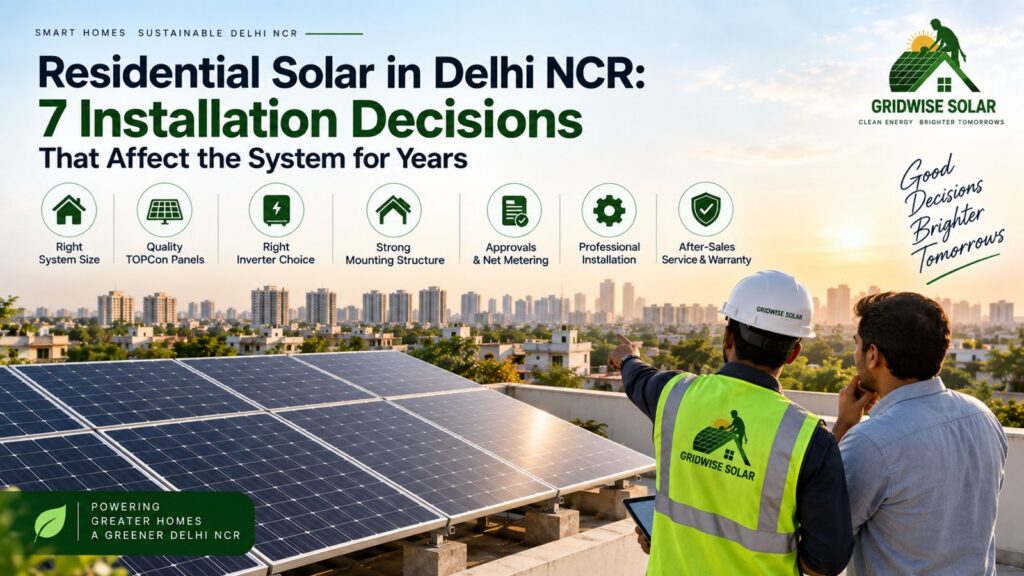
When you look beyond the brand of the solar panels and KW rating, the installation of solar in Delhi NCR is a success. Panel technology, inverter setup, rooftop layout, mounting structure, electrical safety, system size, and installation quality drive long-term results.
An experienced solar company in Delhi NCR builds those choices around your actual house instead of a fixed package. Homeowners who plan effectively before construction begins enjoy a system that is reliable, requires little attention, and meets their electricity needs for years.
How Does Solar Installation in Delhi NCR Work?
A proper residential solar job moves step by step from checking the roof to switching the system on. Good solar installation in Delhi NCR usually covers:
- Site Assessment: The team checks your power use, sanctioned load, free roof space, shade, current wiring, and any extra power you may need later.
- System Sizing: We size the system based on daily consumption, usable roof area, and expected future demand.
- Rooftop & System Design: Panel placement accounts for water tanks, stairs, shadows, walkways, and everyday terrace use.
- Component Selection: TOPCon solar panels, inverter type, mounting frame, cables, protection gear, and other parts are locked in.
- Installation: The team installs the mounting first, then the panels, inverter, wiring, earthing, and safety devices.
- Testing & Commissioning: The team checks everything to ensure generation, the inverter, connections, and safety parts work as they should.
- Documentation & Grid Support: The team assists with paperwork, approvals, and net-metering as required.
A full solar project for a residence then involves assessment, design, parts selection, installation, safety testing, and test fitting, not just taking the panels and putting them on the roof.
7 Crucial Installation Decisions That Affect the System for Years
1. Choosing the Right Solar System Capacity
The first step is choosing the solar capacity your house truly needs. Plan around real electricity use, daytime loads, sanctioned load, free roof space, and what you may add later. A big villa with several ACs, pumps, lifts, and heavy appliances usually needs far more capacity than a smaller independent house.
Gridwise Solar custom designs 5kW, 10kW, 25kW, and custom residential solar in Delhi NCR to suit every home. Think small and think just the right size; not the biggest.
2. Selecting the Right Panel Technology
Panels sit out in heat, dust, rain, and weather for years, so never pick them only because they cost less.
Gridwise Solar fits TOPCon solar panels on residential jobs. They are highly efficient, making them suitable for modern roofing where space is limited.
More efficient panels extract more power from a smaller roof area while maintaining design aesthetics. Check the technology, efficiency, maker, warranty, and long-term fit before you sign off.
3. Planning the Rooftop Layout Properly
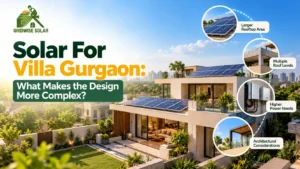
Total terrace size and the area you can actually use for solar rarely match. Water tanks, staircase rooms, parapet walls, outdoor AC units, shadows, access paths and other rooftop items all shape the final panel plan.
A solid design puts panels where they work best without blocking maintenance routes or making the terrace hard to use.
This matters a lot for home solar in Delhi NCR, where many independent houses and villas have tricky roof layouts. Weak planning often creates avoidable shade, wastes space, or makes maintenance difficult later.
4. Choosing the Right Inverter Configuration
The inverter turns panel power into electricity the house can use, so it ranks among the system’s key parts. Most homes run well with a well-planned string inverter. On suitable premium jobs, Gridwise Solar also offers Enphase microinverters.
Microinverters work at each panel and give detailed panel-level data. They are useful if the roof faces different directions or if you want more accurate performance figures. Choose the inverter for the actual design, not the highest-priced one.
5. Selecting a Strong Mounting Structure
The mounting frame holds the panels for years, yet many homeowners skip it when they compare quotes.
A solid structure needs strength, stability, outdoor toughness, and the correct panel angle. Elevated frames on some homes also leave usable terrace space under the panels.
When you look at solar in Delhi NCR, ask what structure comes with the quote, what material it uses and how it was planned for your roof. Even top TOPCon panels need a properly engineered frame under them.
6. Checking Electrical Safety and Protection
A residential solar system needs more than panels and an inverter.
DC cables, connectors, ACDB/DCDB protection, isolators, surge protection, earthing, and related electrical parts all keep the system safe and steady.
These balance-of-system components must be clearly mentioned in professional solar services in Delhi NCR. Ask about cable brands, earthing arrangements, protection, and the inverter and safety gear location. These parts aren’t visible in the final system, but they make it more or less solid.
7. Choosing the Right Solar Installer
Good panels and quality gear still fail if the fitting is poor. The installer brings panels, the inverter, mounting, wiring, protection, earthing, testing, and commissioning into one working system.
Professional residential solar services in Delhi NCR need careful planning, neat work, full testing, and solid support after the system goes live.
Compare the installer as closely as you compare the equipment. A trustworthy partner describes the design and remains accessible after completion.
Conclusion
A proper residential solar in Delhi NCR system begins with the right calls even before climbing on the roof.
The system’s performance over the years depends on factors such as capacity, panel technology, roof design, inverter installation, mounting systems, electrical safety, and installer quality.
Gridwise Solar delivers quality residential solar in Delhi NCR with TOPCon panels, reliable components, custom planning, and professional fitting.
If you are planning a rooftop system, reach out to Gridwise Solar for a site check and a solution built around your home’s real power needs.
FAQs
Which solar panels are best for residential homes in Delhi NCR?
High efficiency and modern roof spaces with limited free space are the reasons why Gridwise Solar adopts TOPCon solar panels for residential jobs.
What size residential solar system should I install?
Right sizing is determined by power consumption, day time load, approved load, roof space and future requirements. Typical sizes include 5kW, 10kW, 25kW and custom.
How long does residential solar installation take?
Time depends on system size, roof condition, part availability, and any approvals needed. A professional team gives a clear timeline after the site visit.
Is rooftop space important for residential solar?
Yes. The number of panels to be installed and how the system is planned depends on the usable roof area, shade, water tanks, stairs, and access paths.
Why is the mounting structure important?
The structure holds the panels and controls stability, angle, durability, and how much terrace space stays usable. It must be designed for your specific roof.
Does Gridwise Solar provide solar installation in Delhi NCR?
Yes. Gridwise Solar handles residential solar installation across Delhi NCR, covering assessment, design, TOPCon panels, fitting, electrical work, testing, and commissioning.
Should I choose solar based only on price per kW?
No. Look at panel technology, inverter, structure, cables, electrical protection, work quality, warranties, and after-sales support, along with the full quote.