



Yes, you can run an air conditioner on solar battery backup if you set up the system correctly. It all comes down to how much power your AC pulls, how big the battery is, what the inverter can handle, how long you need the backup to last, and what else is running at the same time. Setting up solar power backup for AC isn’t the same as keeping a few lights, fans, or your Wi-Fi running.
If you are looking at solar backup for AC at home, the real question is not just “can the battery run the AC?” You need to check whether the full solar and battery setup has enough juice to keep the AC running safely for as long as you need, without leaving the rest of the house short.
How Does Solar Backup for AC Work?
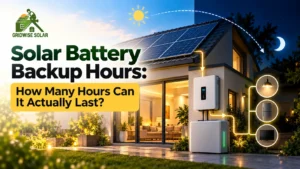
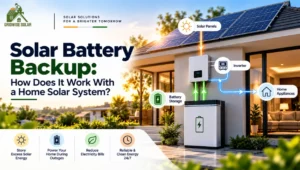
The solar battery backup system takes electricity from the solar panels and stores it until you need it. When the sun is out, the solar panels make electricity. Your house can use that power right away. Any extra can charge the battery if the system is set up that way.
When the sun drops, or the grid fails, the hybrid inverter pulls power from the battery and sends it to whatever is on the backup side.
For AC, this means the battery doesn’t feed the air conditioner directly. The stored DC power goes through the inverter first, and then the inverter gives the AC the normal AC power it needs.
A typical system works through: Solar panels → hybrid inverter → Battery storage → AC and other backup loads.
That is why you have to look at the solar panels, the battery, and the inverter as one package when you want AC power backup.
Can a Solar Battery Run an Air Conditioner?
Yes, it can, but not every solar battery setup will run every air conditioner. How much power the system needs depends on the size of the AC, how it draws electricity, and how you use it.
A small inverter AC pulls very different amounts of power than a bigger unit. Running one AC for a short while is also very different from keeping two or three ACs on at once.
So the system has to take these things into account:
- AC capacity
- Running power requirement
- Starting requirements
- Number of ACs
- Desired backup duration
- Other appliances operating simultaneously
- Battery usable capacity
- Hybrid inverter capacity
If you specifically want a solar battery for AC, sort out these points first before you pick the battery or the inverter.
How Much Battery Is Needed to Run an AC?
There is no one-size-fits-all battery for AC backup. You need to consider both how much power the AC needs and how long you want it to run.
One homeowner might only need one AC for two hours when the power goes out. Another might want the AC running for six hours and also keep lights, fans, the fridge, Wi-Fi and other things going at the same time. The second case needs a lot more energy stored in the battery.
The basic sum looks like this:
Required backup energy = appliance load × desired backup duration
In real jobs, you also have to account for inverter efficiency, how much of the battery you can actually use, and the conditions the system operates under. That is why asking for “a battery that can run an AC” doesn’t give you the right answer.
What About Multiple ACs?
If you try to keep more than one AC going during a power cut, the system has to be a lot bigger. A house with two or three air conditioners needs far more backup than a house that only prioritises one AC. Some people choose to keep the bedroom AC running and leave the others off.
That is a practical way to keep the battery and inverter size under control while still getting cooling where you need it most.
When the installer designs the system, they should mark which appliances are must-have backup loads and which ones can stay on normal grid power only.
Can Solar Panels Run the AC During the Day Without the Battery?
Depending on how the solar system is set up and how much sun you are getting, the solar energy can feed the house loads straight during the day. That cuts down how much power you pull from the grid.
But exactly how it works depends on the inverter settings, how much the panels are making, what the house is using, and whether there is a battery in the mix. A battery really helps when you want to save solar energy for later, when the panels aren’t producing enough.
If you are looking into solar installation in Delhi, this difference matters. A normal grid-tied system and a hybrid system with battery do not do the same job.
Solar Backup for AC During a Power Cut
A big reason people look at battery storage is to keep the power on when the grid fails. If the power goes out on a hot afternoon or evening, a properly configured hybrid system can keep the loads you choose running.
The system has to be wired the right way for backup though. The AC has to sit on a proper backup circuit, and both the inverter and the battery need enough capacity.
A professional solar company in Delhi should check the house’s electrical needs before they promise AC backup. You should also tell them clearly whether you want backup for one AC, several ACs, or only certain rooms.
What Happens to Other Appliances When the AC Is Running?
People often miss this point.
Say the battery is powering the AC during a cut. If lights, fans, the fridge, the router, the TV, the water pump, and other things are also on the same backup circuit, the battery has to handle them all at once.
The more things you run together, the quicker the battery runs down. So plan the solar power backup around a realistic list of what will actually be on, instead of assuming the whole battery capacity is free for the AC alone.
Solar Battery Installation for AC Backup
A proper solar battery installation considers more than just battery size. The installer has to check the existing wiring, whether the inverter will work with the battery, where the battery will sit, the protection gear, the cables, the backup circuits and the monitoring.
The battery also has to be fitted the way the manufacturer says. This matters a lot in homes where the battery and inverter end up in or near the existing electrical cupboard.
If you are planning solar battery installation in Noida, a proper site visit helps decide where everything should go and how the backup circuits should be set up.
Can an Existing Solar System Be Upgraded for AC Backup?
Sometimes you can upgrade an existing solar system, but it depends on what is already there.
If the present setup uses a grid-tied inverter that cannot handle a battery, adding storage usually means changing the layout or adding extra gear.
Before anyone tries an upgrade, the installer should check:
- Existing solar panel capacity
- Current inverter model
- Electrical configuration
- Available battery compatibility
- Existing protection equipment
- Backup-load requirements
- Available installation space
Don’t assume you can bolt any battery onto the inverter you already have.
Solar Backup for AC in Gurgaon, Ghaziabad and Faridabad
The same rules apply when you plan solar backup for AC in Gurgaon. Size the system around the actual loads in the house instead of picking a battery based only on the number on the label.
If you are looking at solar services in Ghaziabad, the check should cover your current electrical setup, the loads you want on backup, and the battery size you need.
The same goes for people planning residential backup in Faridabad. First decide which appliances must stay on during a cut, then choose the system. The place changes but the basic engineering stays the same.
What About Solar Backup for AC in Delhi NCR?
Houses across the NCR do not all need the same amount of power. A single house with one AC may need only a modest backup, while a big villa with several ACs and other heavy loads may need a much larger system.
That is why solar installation in Delhi NCR has to be treated as a job specific to that property.
Gridwise Solar looks at the house’s electricity needs, roof conditions, available solar capacity, and which loads you want on backup before finalising the setup.
What Should You Ask Before Installing Solar Backup for AC?
Before you say yes to an AC backup system, ask the installer:
- What is my AC’s actual power requirement?
- How many ACs should receive backup?
- How long should the AC operate during a power cut?
- What battery capacity is required?
- What hybrid inverter capacity is required?
- Which other appliances will operate simultaneously?
- Which loads will be placed on the backup circuit?
- What happens when the battery reaches its minimum charge level?
- How will the battery recharge?
- What warranties apply to the battery and inverter?
These questions help stop you ending up with a system that is too small for what you need.
Conclusion
A battery-backed solar system that is put together properly can give you solar power backup for AC, but it only works if the whole system is right, not just the battery.
You have to look at the AC’s power needs, how long you want backup, how many other appliances are on, the battery size, and the hybrid inverter as a whole.
If you are thinking about a solar battery for AC, the sensible way is to list the loads you actually need on backup first, then design the solar, inverter, and battery around that list.
Gridwise Solar provides residential solar solutions with TOPCon panels and builds hybrid, battery-backed setups to match each property’s needs.
Whether you want solar backup in Delhi, Noida, Gurgaon, Ghaziabad, Faridabad, or anywhere else in Delhi NCR, a properly sized system can turn your rooftop solar into a more useful home energy and backup setup.