


Solar power is quickly becoming the top pick for Indian homes and companies that want lower power bills and cleaner energy sources. Putting residential solar panels on your roof makes sense as a great long-term investment decision. However, upfront payment stops many families from making the switch. Solar subsidies in India help solve this problem.
The government programs make solar panel installation services in India cheaper, providing a high return on investment. They cut down how much you pay at the beginning. They give you tax breaks. They offer loan support through approved plans. When homeowners use these subsidies, they save on investment. They also depend less on power companies’ help and make the environment cleaner.
This article looks at why subsidies matter so much when installing solar panels.
What is a Solar Subsidy?
A solar subsidy means financial assistance from the government that reduces what you pay for buying and installing solar panels. The goal is to push more people toward solar power by making it cheaper for homes, companies, and schools. Subsidies come in different shapes:
•Direct financial support: The government pays for a percentage of your solar panel system cost.
•Tax benefits: Lower GST rates or extra deductions on income tax when you invest in solar.
•Soft loans and grants: Loans with low interest or free grants that reduce what you pay at first.
Subsidies reduce the initial investment. This opens solar energy to more people. It speeds up the switch to cleaner power sources.
Why Subsidies Are Critical for Solar Panel Installation
1. Reducing Upfront Costs
The main problem stopping homeowners from going solar is paying everything at once. A normal home solar panel setup costs between INR 1 lakh to 5 lakh. The price depends on how big your system is. Solar energy saves you money eventually. But many people cannot afford such a big one-time payment.
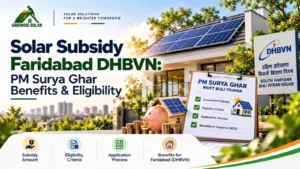
Subsidies fix this issue by significantly reducing what you pay upfront. The government plans in India provide subsidies for on-grid home solar projects. You can get up to 50 % of the system cost covered. This brings solar panels within reach. It encourages more families to invest in clean energy.
2. Promoting Faster ROI
Installing solar panels without subsidies means waiting longer to get your money back. Usually it takes 5-7 years. This depends on how much power you use and the rates charged by your area. Subsidies make this waiting time shorter. They reduce what you spend at the beginning. This means you start saving on power bills much earlier.
Take this example. A 3 kW system costs INR 200,000. The government gives you a subsidy of 108,000. Now you only pay INR 92,000. Your monthly savings on electricity bills cover this smaller amount much quicker. You get an attractive return on investment (ROI) faster and the payback period reduces to 3-5 years.
3. Making Solar Energy Accessible to More People
Solar energy remains out of reach for most people when subsidies are not available. Subsidies make it fair for everyone. Middle-income families can now install solar systems too.
This matters a lot in India. Power costs keep going up. More people need electricity every year. When many people install solar panels, regular power sources do not have to work as hard. A larger number of people will be able to generate electricity at home.
4. Encouraging Renewable Energy and Sustainability
The government desires that more people should consume renewable energy. They want less use of fossil fuels. That is why subsidies exist. Solar panels installed through subsidy plans help reach national and world environmental targets:
•Greenhouse gas emissions go down
•We use coal power plants less
•Energy import costs drop
•Sustainable living becomes normal
Subsidies give people a push. They encourage homeowners to choose environmentally friendly alternatives without being afraid of the cost.
5. Boosting Local Solar Industry
Homeowners are not the only people who benefit from subsidies. They make the solar business grow. When money incentives get more people to install solar panels, demand goes up. People need more solar products. They need installation services. They need maintenance work. This creates jobs. It helps local manufacturers. It drives new technology forward.
Companies like Gridwise Solar in Delhi NCR see more people choosing residential solar solutions because of subsidies. More homeowners get affordable clean energy.
Types of Solar Subsidies Available in India
India provides different kinds of solar subsidies to make renewable energy more accessible.
These are the central government schemes that provide financial assistance to install a rooftop set up, state-wide incentives that further reduce the cost of the system, and, lastly, tax cuts or interest-free loans that help in their easy payments.
Knowing these choices helps homeowners pick the best route for their solar investment.
1. Central Government Subsidies
MNRE provides subsidies on a rooftop solar systems. Important points include:
•Residential Rooftop Solar Subsidy: Covers upto Rs. 78,000 in the cost of system installations for homes.
•Net Metering Benefits: Families can send additional energy to the grid. They receive discounts on their electricity bills.
These subsidies play a critical role to homeowners who wish to have solar power without paying a lot initially.
2. State Government Subsidies
Many states in India give extra rewards. Delhi, UP, and Chhattisgarh offer these programs. They may include:
•Extra discounts on system costs
•Lower registration fees for net metering
•Loans with low interest for home
Using both central and state subsidies together can dramatically reduce the cost of installing solar panels.
3. Tax Benefits and Loans
Some incentives come as tax benefits or easy loans:
•Accelerated Depreciation (AD): Businesses can claim up to 40% depreciation on solar equipment in the first year. This reduces taxable income.
•Low-Interest Loans: Many banks give loans with good rates for solar panel installations under government-backed plans.
Common Misconceptions About Solar Subsidies
- Subsidies are only for large projects: This is wrong. Most subsidy plans are made specifically for home rooftops. Even small 1-3 kW systems qualify.
- Applying for subsidies is complicated: Some paperwork is needed, but good solar installation companies do everything for you. An example of such is Gridwise Solar in Delhi NCR, which guides homeowners through the process of subsidy applications, approvals, and document preparation. They make it simple.
- Subsidies reduce system quality: Not true. Approved equipment and certified installers are linked with subsidy plans. This guarantees of good solar panels and installations.
- Subsidies are only for rich households: As we discussed, subsidies make solar energy accessible to middle-income families. They ensure more homeowners can afford it.
Steps to Avail Solar Subsidy
The solar system subsidy has been made easy to collect, so to install your solar system without any huddles, check out the following steps:
- Select an Installer: One should always choose a government-approved installation firm that is credible and highly skilled in product installation. Certified firms ensure that your system is eligible for subsidies.
- Select Approved Equipment: It is only possible to have subsidies on MNRE-approved solar panels and inverters.
- Apply Through Your Installer: With your permission, the solar installation company will forward your application to the government or the responsible authorities. This usually includes technical details, proof of identity, and property ownership papers.
- Inspection and Approval: After checking everything, a government official may review the system to ensure it follows the rules.
- Subsidy Disbursement: Once approved, the subsidy goes straight to your bank account.
Following these steps reduces mistakes. You get the maximum financial benefit.
Long-Term Benefits of Solar Subsidies
Subsidies do more than just lower what you pay at the start. They shape the long-term good things that come from going solar. Reducing upfront costs makes it easier to choose renewable energy. Homeowners will save on power bills for many years. Beyond saving on cost, subsidies help with energy independence. They reduce your carbon footprint. They make your property worth more.
They also push people to adopt solar sooner. This helps you get the most financial and environmental returns. It supports a cleaner, more sustainable energy system.
1. Significant Cost Savings
Subsidies lower what you invest at first. But the benefits go much further. Lower installation costs mean more savings on electricity bills for as long as your system works. A properly maintained solar system helps homeowners save up to 50-70% on monthly electricity bills. This depends on how much energy you use.
2. Enhanced Energy Independence
Power prices keep rising in Delhi NCR and other city areas. This makes solar energy increasingly attractive. Installing a subsidized solar system gives homeowners energy independence. You rely less on the grid. You protect yourself from future rate increases.
3. Environmental Impact
Solar energy cuts carbon emissions. It reduces the use of non-renewable energy sources. Subsidies speed up how many people adopt solar. This increases the total environmental benefits. More households installing solar panels means fewer coal-based power plants running at full power. This leads to cleaner air and sustainable cities.
4. Boosting Home Value
Houses with solar setups are worth more now. A subsidized solar system does not just reduce living costs. It can also raise your property resale value. Buyers increasingly want energy-efficient, low-maintenance homes. A solar-equipped house gives them both.
5. Strengthening the Solar Industry
Subsidies create more demand for solar equipment, installation work, and maintenance. This pushes innovation forward. It creates jobs. It supports local manufacturers. Companies like Gridwise Solar grow by expanding their services. They teach homeowners about renewable energy. This creates a lasting cycle of growth and adoption.
Conclusion
Subsidies in solar panel installation services mean more than just investment support. They act as a trigger for widespread renewable energy adoption. They make solar energy affordable. They reduce payback time periods. They improve energy independence. They help create a cleaner environment.
To the residents of India, specifically the citizens of Delhi NCR, Faridabad, and similar regions, the decision to install solar panels in the home with the help of government subsidies makes sense in terms of environmental and financial benefits. The professional installation and periodic maintenance, combined with the subsidies, assure you that your solar investment will bring reliable energy and substantial savings into your hands in several years.
The entire process becomes easy with companies such as Gridwise Solar. They handle subsidy applications, system installation, and long-term maintenance. With their knowledge, homeowners can get the most from subsidies. They can enjoy everything solar power offers.
Invest smart. Claim your subsidy. Enjoy affordable, clean energy with Gridwise Solar.
“Solar Panel Installation Trends to Follow in 2025” explores how solar technology is evolving with smarter systems, improved efficiency, and sustainable designs. It’s a helpful read for anyone interested in understanding the latest changes shaping the future of solar energy.