






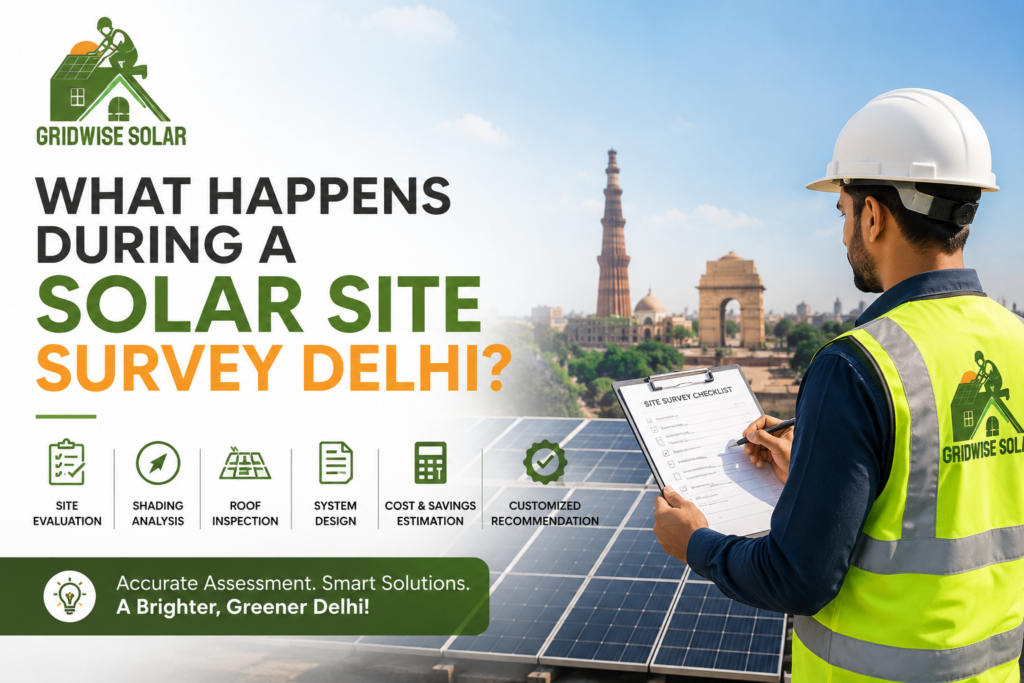
The initial technical process before designing and installing a rooftop solar system is a Solar Site Survey Delhi. The team visits your premises and checks your electricity usage, rooftop area, structural condition, shade, placement of panels, electrical infrastructure, and safety needs. They rely on what they discover to figure out the right dimensions for a system, select the items to be used, determine the layout of the solar panels, and calculate the amount of power a solar system can supply.
Putting up solar panels is not just about counting how many fit on the roof. The system has to work with the wiring already in the building, the free space on the roof, how much sun hits the place, the strength of the roof, and what power needs you might have later.
That is why a proper solar site survey matters in the solar installation process. It gives the engineering team the facts they need to create a solid solar system design for your property instead of handing you a standard package.
Homeowners and businesses looking at solar installation in Delhi can also use this knowledge to see if a solar company follows a real process.
Why Is a Solar Site Survey Important?
A solar site survey shows if a property can take rooftop solar and what kind of system will work well there.
A proper rooftop solar survey spots problems before anyone starts work. These may be limited rooftop space, structural vulnerabilities, shade from nearby structures, un-prepared wiring, or obstructions in the path of panels.
The team then works with the information they’ve collected to help form the design of the solar system, manage solar system sizing, select the equipment, and develop the solar installation plan.
For a quality-focused solar company in Delhi, the site survey is not a quick look at the roof. It is the base for the whole project.
What Does a Solar Site Survey Include?
A detailed Solar Site Survey Delhi usually looks at several technical and property-specific points.
1. Understanding Your Electricity Consumption
First the team finds out how much power the property really uses.
For homes they look at recent electricity bills to see monthly and seasonal use. They also monitor commercial/industrial sites for running hours, machine loads, peak demand and daytime power usage.
This helps them in determining whether a 3kW, 5kW, 10kW, 25kW, 50kW or larger system will fit and help in accurate solar system sizing.
The goal is not to put in the biggest system possible. The system should match real electricity needs and the property’s existing setup.
2. Measuring Available Rooftop Space
The survey team checks the usable rooftop area for solar panel installation.
Not every bit of roof can take panels. Water tanks, stairs, vents, parapet walls, dishes, skylights, and other items take up space.
The team looks at the free area to work out:
- Number of panels that can be installed
- Suitable solar panel layout
- Required access pathways
- Maintenance clearance
- Mounting structure requirements
- Potential future expansion
On bigger homes, villas, factories, and commercial buildings careful rooftop planning matters more because the space may need to hold a larger solar system for residential solar installation or commercial solar installation.
3. Checking Rooftop Orientation and Panel Placement
Solar panel orientation and positioning directly affect how much energy the system makes.
The installation team verifies during the solar site assessment the direction and configuration of the rooftop to determine the most optimal solar panel placement and finalise the solar panel layout.
They are designed to absorb as much sunlight as possible, eliminate unnecessary shading and ensure safe handling during installation.
A professional solar company also considers panel tilt, row spacing, cleanability and other roof surface considerations when determining the final layout of rooftop solar installation.
4. Shading Analysis
One of the important features assessed in a site survey is a solar shading analysis.
Buildings, trees, water tanks, parapet walls, towers, and other items on the rooftop can cast shadows on the solar panels. Even light shade can reduce the production of these panels and sometimes the entire array.
The survey team spots possible shade sources and sees how they change through the day as part of the solar shading analysis.
When shade is a real issue the team can change the system design. They may also look at panel-level optimization and Enphase microinverters if those give a clear benefit for the job.
5. Structural Assessment of the Roof
Solar panels and their mounting structures put extra weight on the rooftop. So the team checks if the roof can take it before work starts.
They look at the type and condition of the roof and note any visible weak spots that could affect the mounts.
On RCC rooftops they check the free areas and what the mounts need. Industrial buildings, sheds, and commercial sites may need a closer look depending on how the roof is built.
A solid mounting structure plus careful structural planning keeps the system steady and safe for years during solar panel installation.
6. Electrical Infrastructure Assessment
A solar system has to connect properly to the property’s existing electrical network.
During the survey the team checks the current electrical panels, connection points, cable paths, meter setup, and other relevant parts.
On commercial and industrial jobs the check is usually deeper because bigger solar systems bring higher loads and more complex distribution.
The survey helps engineers decide:
- Inverter location
- Cable routing
- Electrical protection requirements
- AC and DC connection points
- Earthing requirements
- Integration with existing electrical systems
These details become a key part of the final solar installation plan.
7. Identifying the Right Inverter Technology
The site survey also helps pick the inverter setup that suits the property.
A standard string inverter works for many jobs. Properties with tricky roofs, mixed directions, or shade issues may do better with other setups.
On higher-end homes Enphase microinverters can make sense when panel-level optimization and monitoring give real value for residential solar installation.
The choice should match the property’s design and needs, not just the costliest option.
8. Planning Mounting Structures
The survey gives the facts needed to design the mounting structure.
Before finalizing the mounting plan, the team reviews the roof type, wind load requirements, roof tilts, free space, and structural requirements.
The structure for such rooftop application should be sufficiently strong to support the panels as well as ensure that they are installed at the proper angle within the overall solar system design.
A well-designed structure also leaves room for cleaning, checks, and later maintenance.
9. Assessing Earthing and Electrical Safety
Electrical safety is another key part of a professional Solar Site Survey Delhi.
The team checks the existing earthing and works out what extra earthing the solar system needs.
Depending on the job this can cover:
- AC earthing
- DC earthing
- Structure earthing
- Lightning protection
- Surge protection
Exact needs depend on the system design, the property, and the electrical rules that apply.
Good safety planning at the survey stage helps avoid electrical problems later.
10. Planning Cable Routes
Cable routing may look minor, but it affects the quality of the finished solar job.
During the site survey the team picks clear paths between the solar array, inverter, electrical panels, and other connection points.
They aim to keep the runs neat, protected, and as short as practical.
Good cable management also keeps residential installs looking tidy and makes later checks and repairs easier for both residential solar installation and commercial solar installation.
11. Selecting the Right System Capacity
After the site survey the engineering team puts all the details together and recommends the right system size through careful solar system sizing.
The recommendation looks at:
- Electricity consumption
- Rooftop space
- Solar generation potential
- Electrical infrastructure
- Future energy requirements
- Budget and project objectives
For example, a household that consumes lots of electricity could require a larger system than some other home that has the same roof area.
That is why system size should come from a proper technical check, not from picking a popular package.
What Happens After the Solar Site Survey?
The site survey is only the start of the project.
Once the details are in, the solar company can move to system design and project planning.
Customized Solar Design
Engineers use the survey facts to set the system layout, panel arrangement, inverter setup, electrical design, and mounting needs for a complete solar system design.
Component Selection
The solar panels, solar inverter technology, mounting structures, cables, electrical protection and monitoring devices must be suitable for the project.
Project Proposal
The customer gets a proposal based on the actual property, not a generic package.
Installation Planning
Once the project is approved the installation team can ready materials, lock the layout, book the dates, and arrange the work as part of the solar installation plan.
This way fewer surprises turn up during installation and the job runs smoother for rooftop solar installation.
How Long Does a Solar Site Survey Take?
Time needed depends on the property and project size.
A small home rooftop may take a short visit. This is typically longer and more in-depth for a villa, commercial building, factory, or industrial site.
The duration of the solar site survey depends on the complexity of the electrical infrastructure, rooftop layout, shading, and size of the system.
The most important thing to remember is a professional survey shouldn’t be rushed solely to provide a quote. The aim is to gather enough facts so the final solar system is technically right.
What Should You Prepare Before the Site Survey?
Property owners can make the visit easier by having a few basic things ready before the solar team arrives.
- Recent Electricity Bills
- Property Access
- Existing Electrical Information
- Future Energy Requirements
Why Choose Gridwise Solar for Your Solar Site Survey?
A detailed site survey is one place where Gridwise Solar’s quality-first approach shows.
Gridwise Solar is a reputed solar company in Delhi NCR that does not work uniformly on all properties. To design the solar system, the team reviews energy consumption, roof conditions, structural requirements, shading, electrical requirements and future requirements.
Customized System Design
The survey information is used to create an installation that suits the property, rather than a standard installation.
Residential & Commercial Expertise
The survey and engineering strategy can be customized to the level of complexity of each installation depending on the scope of work, whether it is residential solar installation, a villa, a commercial installation or an industrial project, Gridwise Solar can handle it.
Quality-Focused Engineering
From panel placement and mounting structures to electrical protection and cable routing, every important installation detail is looked at during planning for solar panel installation.
Advanced Technology Options
Where it makes sense, Gridwise Solar can also check advanced options such as Enphase microinverters for homes where panel-level optimization and monitoring add value.
End-to-End Solar Installation
The site survey links straight into the rest of the project — system design, component choice, installation, testing, commissioning, and after-sales support.
Conclusion
A Solar Site Survey Delhi is much more than measuring rooftop space. It is a complete technical examination that demonstrates the design, installation and connection of a solar system.
Every aspect from the electricity consumption to rooftop measurements, shading, structural strength, electrical infrastructure, mounting structures, cable routes, earthing and selection of an inverter, will influence the final system design.
For homeowners and businesses planning solar installation in Delhi, picking a solar company in Delhi that does a proper solar site assessment can make a real difference to how well the system performs over time.
Gridwise Solar brings detailed site assessment, custom engineering, quality parts, and professional installation together to build rooftop solar systems around the real needs of each property.
Planning to install solar? Book a professional Solar Site Survey Delhi with Gridwise Solar and find out what solar system fits your property.