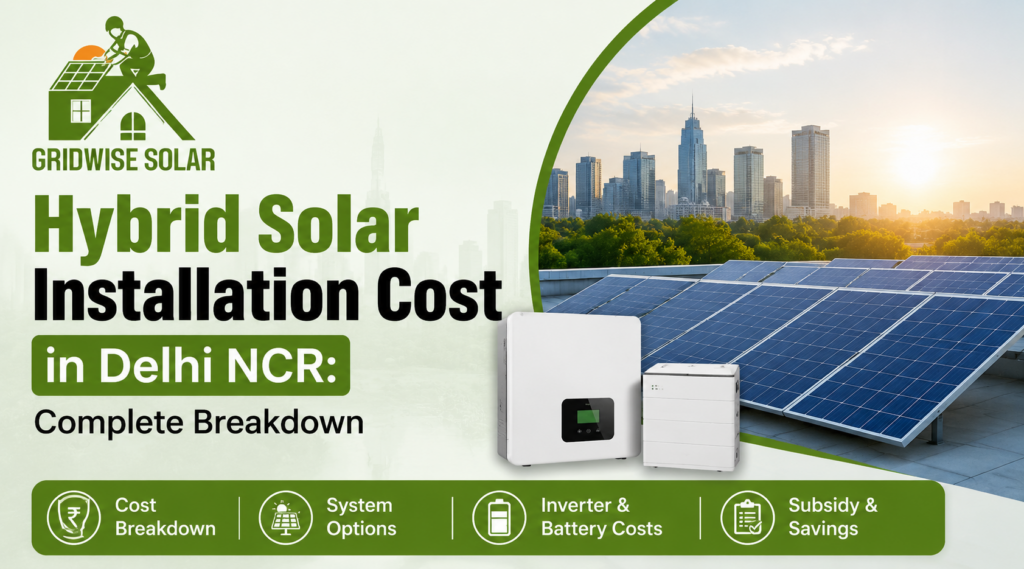
Homeowners in Delhi-NCR are showing growing interest in hybrid solar systems these days. People look beyond just cutting their power bills. They seek reliable backup power, effective energy management, and robust security for their future needs. That explains the rise in searches for “Hybrid Solar Installation Cost in Delhi NCR” during 2026.
Still, hybrid systems operate quite differently from basic rooftop solar setups. A hybrid package brings together solar panels, batteries, hybrid inverters, backup connections, and detailed electrical work. All these parts push the overall installation cost upward.
Homeowners also need to know that hybrid systems in Delhi often fail to receive standard net metering approval and rarely qualify for government subsidy programs. This situation makes careful planning essential right before any work begins.
This guide breaks down every part of the costs involved.
Why Hybrid Solar Systems Cost More Than Standard Solar
A standard on-grid solar system produces electricity mainly during the day. A hybrid system adds battery storage and backup power options, which makes everything more complex and raises the price.
Extra expenses come from:
- Battery systems
- Hybrid inverter technology
- Backup integration
- Advanced electrical setup
Thanks to these parts, the hybrid solar setup for houses turns into a full energy management solution rather than a simple rooftop solar addition.
Main Factors Affecting Hybrid Solar Installation Cost in Delhi NCR
The complete Hybrid Solar Installation Cost in Delhi NCR relies on several technical and real-world elements. Each house comes with its own power consumption pattern, backup needs, and roof situation, all of which influence the final price.
Solar System Size
Bigger system capacity leads to higher installation costs. Small houses often go for 3kW systems, medium houses choose 5kW options, and larger villas need 8kW or bigger setups.
Larger capacity involves:
- More solar panels
- Bigger inverter
- Larger battery storage
These choices increase the total money needed for the project.
Battery Type and Battery Capacity
Picking the right battery stands as one of the largest cost items in a hybrid system.
Lithium batteries come with a higher starting price but deliver:
- Longer life
- Better efficiency
- Faster charging
- Lower maintenance
Lead-acid batteries start cheaper but need frequent upkeep and last for a shorter time.
Battery size also changes the price a lot since more backup time demands bigger storage units.
Hybrid Inverter Quality
The hybrid inverter manages solar power production, battery charging, backup changes, and grid links. Good inverter technology boosts energy efficiency and keeps the whole system dependable.
High-end transformerless hybrid inverters usually cost extra but cut down on power waste and support better results over many years in a home hybrid solar system in India.
Backup Requirement
The level of backup wanted has a direct impact on battery size and the entire project expense.
Houses that need backup just for lights and fans can use smaller battery banks. Houses that want backup for the whole place, such as air conditioners and big appliances, need much bigger battery storage.
This reason shows why backup decisions carry heavy weight in the Hybrid Solar Installation Cost in Delhi NCR.
Rooftop Design Complexity
Each roof presents unique challenges. Certain houses need added structural support, special panel arrangements, extra wiring paths, or steps to handle shadows.
Tricky rooftops raise labor and setup expenses since the full residential hybrid solar installation demands more technical skill.
Average Hybrid Solar Installation Cost in Delhi NCR
The rough installation cost varies according to battery type, system size, inverter quality, and backup needs.
3kW Hybrid Solar System Cost
A 3kW hybrid system generally falls between ₹3.5 lakh and ₹5 lakh based on battery size and part quality. This option works well for small homes that have average power use.
5kW Hybrid Solar System Cost
A 5kW hybrid system normally costs between ₹5 lakh and ₹8 lakh. This size ranks among the popular picks for average families that run more cooling equipment and need steady backup.
8kW to 10kW Hybrid Solar System Cost
Big houses and villas commonly pick 8kW to 10kW systems, which can run between ₹8 lakh and ₹15 lakh depending on backup needs and battery choices.
Why Hybrid Systems in Delhi Usually Don’t Get Net Metering
A common wrong idea holds that all solar setups receive net metering approval right away. In Delhi, hybrid systems typically miss out on standard net metering available to regular on-grid systems.
The cause lies in the battery storage and backup features inside hybrid systems, which alter how electricity moves between the setup and the grid.
For this reason, people planning a hybrid solar installation for homes in Delhi NCR should pay closer attention to using their own power and battery storage instead of sending electricity back to the grid.
Why Hybrid Systems Usually Don’t Get Subsidies in Delhi
Most government subsidy schemes for rooftop solar target standard on-grid home systems. Hybrid systems include batteries and storage equipment, so they usually stay outside normal subsidy rules in Delhi.
Homeowners, therefore, need to base their spending decisions on:
- Long-term savings
- Backup reliability
- Energy independence
instead of counting on any subsidy help.
Is Hybrid Solar Still Worth It?
Many homeowners find that hybrid solar offers clear money and practical benefits.
A hybrid system delivers:
- Backup during power cuts
- Better energy security
- Lower grid dependency
- Smarter electricity management
Houses that face large electricity bills and regular power outages gain the biggest advantages from a well-planned hybrid solar setup for houses.
Common Mistakes That Increase Hybrid Solar Cost
Many homeowners end up spending extra money due to bad planning.
Oversized Battery Selection
Putting in battery banks that exceed actual needs raises project expenses without giving useful extra backup time.
Cheap Inverter Selection
Poor quality inverters lower overall efficiency and cause ongoing performance troubles.
Poor Backup Planning
Bad load calculations result in weak backup or extra money spent on unneeded batteries.
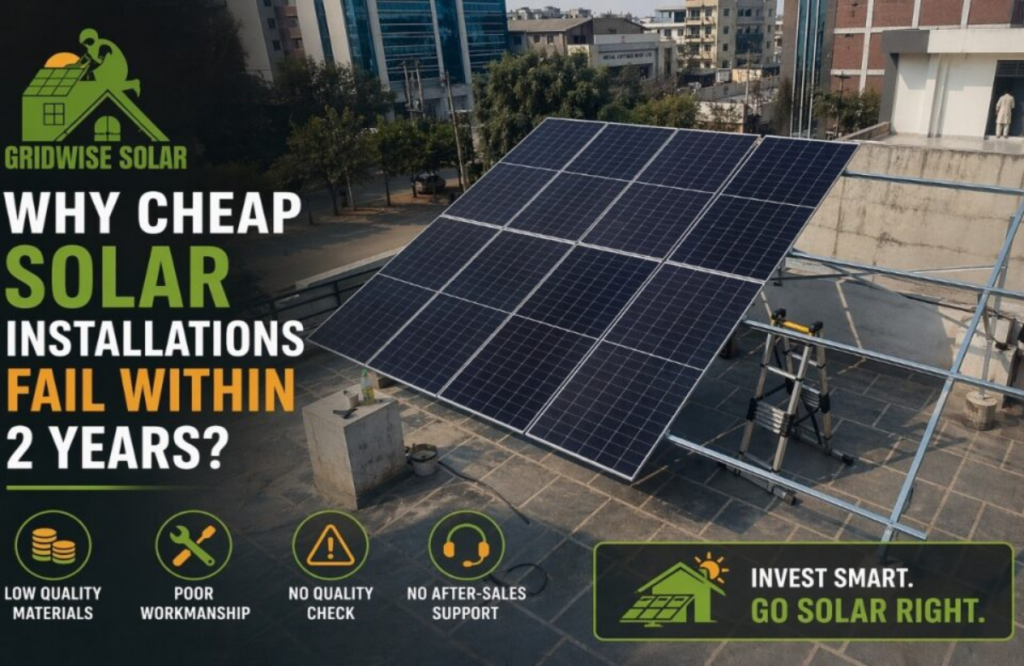
Choosing Based Only on Lowest Price
Low-cost setups frequently bring weak designs, reduced efficiency, and future technical headaches.
Why Proper Installation Matters More in Hybrid Solar
Hybrid systems involve more technical details than basic rooftop solar since solar panels, batteries, inverter systems, and grid connections all need to operate together without problems.
Bad installation hurts:
- Battery charging efficiency
- Backup switching
- System safety
- Long-term reliability
This explains why installation standards have a direct effect on how well the system runs.
Why Choose Gridwise Solar for Hybrid Solar Installation?
Gridwise Solar works on creating strong hybrid systems built for houses in Delhi NCR.
Customized Hybrid System Design
Each job gets planned around actual power use, roof conditions, and backup needs rather than selling ready-made packages.
Smart Battery Planning
Gridwise Solar takes time to set battery sizes that match backup needs with reasonable spending.
Professional Installation Team
The company takes care of correct panel positioning, electrical safety standards, solid mounting, and smooth hybrid connections.
End-to-End Execution Support
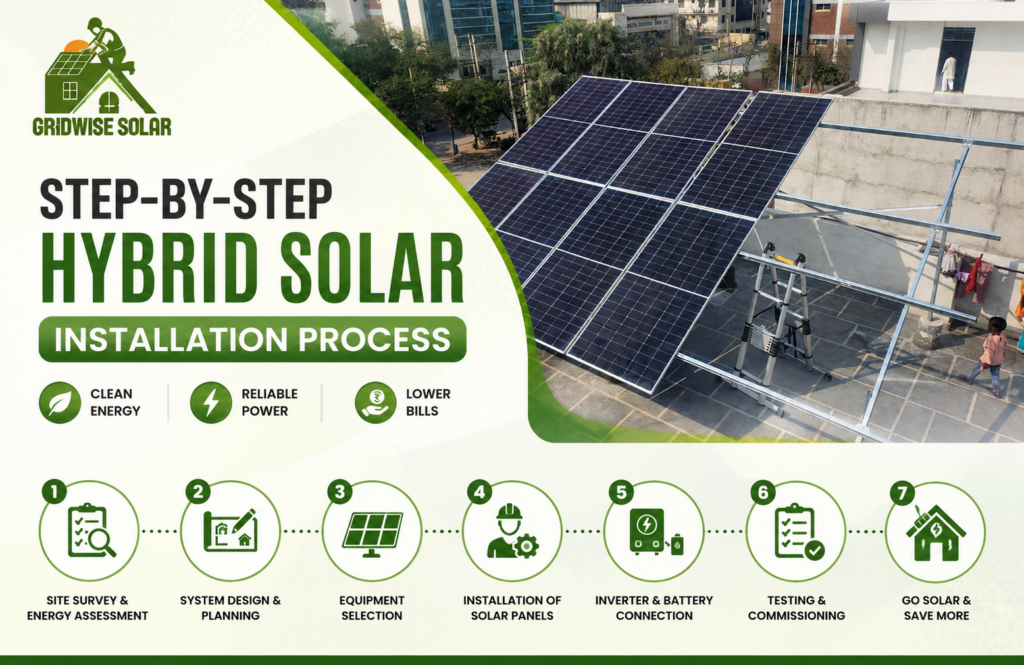
The team manages the full process from roof checks and planning through to final setup and startup.
Long-Term Performance Focus
Gridwise Solar creates systems that reach high efficiency, deliver solid backup, and create good savings over time.
This approach positions Gridwise Solar as a popular option for homeowners looking for a solar installation company in Delhi and considering hybrid solar installation for homes in Delhi NCR.
Conclusion
Knowing the actual Hybrid Solar Installation Cost in Delhi NCR matters because hybrid systems differ a lot from ordinary rooftop solar packages. They bring battery storage, advanced inverter systems, backup connections, and improved energy handling, all of which push up the total spending.
At the same time, homeowners should realize that hybrid systems in Delhi usually miss standard net metering approval and rarely qualify for subsidy programs. This reality makes good design and installation quality even more critical.
A well-designed hybrid system gives benefits that go beyond power bill reductions. It supplies steady backup power, greater energy freedom, and improved long-term energy protection for houses.
And with a skilled partner such as Gridwise Solar, homeowners can create a dependable hybrid solar system ready for the future with strong performance and intelligent power use.