A hybrid solar system is not installed in the same manner as a typical rooftop solar system. It integrates solar generation, battery storage, as well as other grid connections into a single complete energy solution. Therefore, careful planning, good technical knowledge, and on-site skill are needed when installing hybrid solar systems.
Many homeowners only think about the panels and the total price. Yet the real output from a hybrid system comes down to how well the whole setup gets designed, how the battery gets sized right, and how cleanly the inverter connects into everything else.
A good hybrid solar setup for homes can cut electricity bills, give steady power during outages, and increase energy self-reliance. This only happens when each part of the installation gets done properly.
This full residential solar installation guide walks through the entire process from early planning all the way to turning the system on.
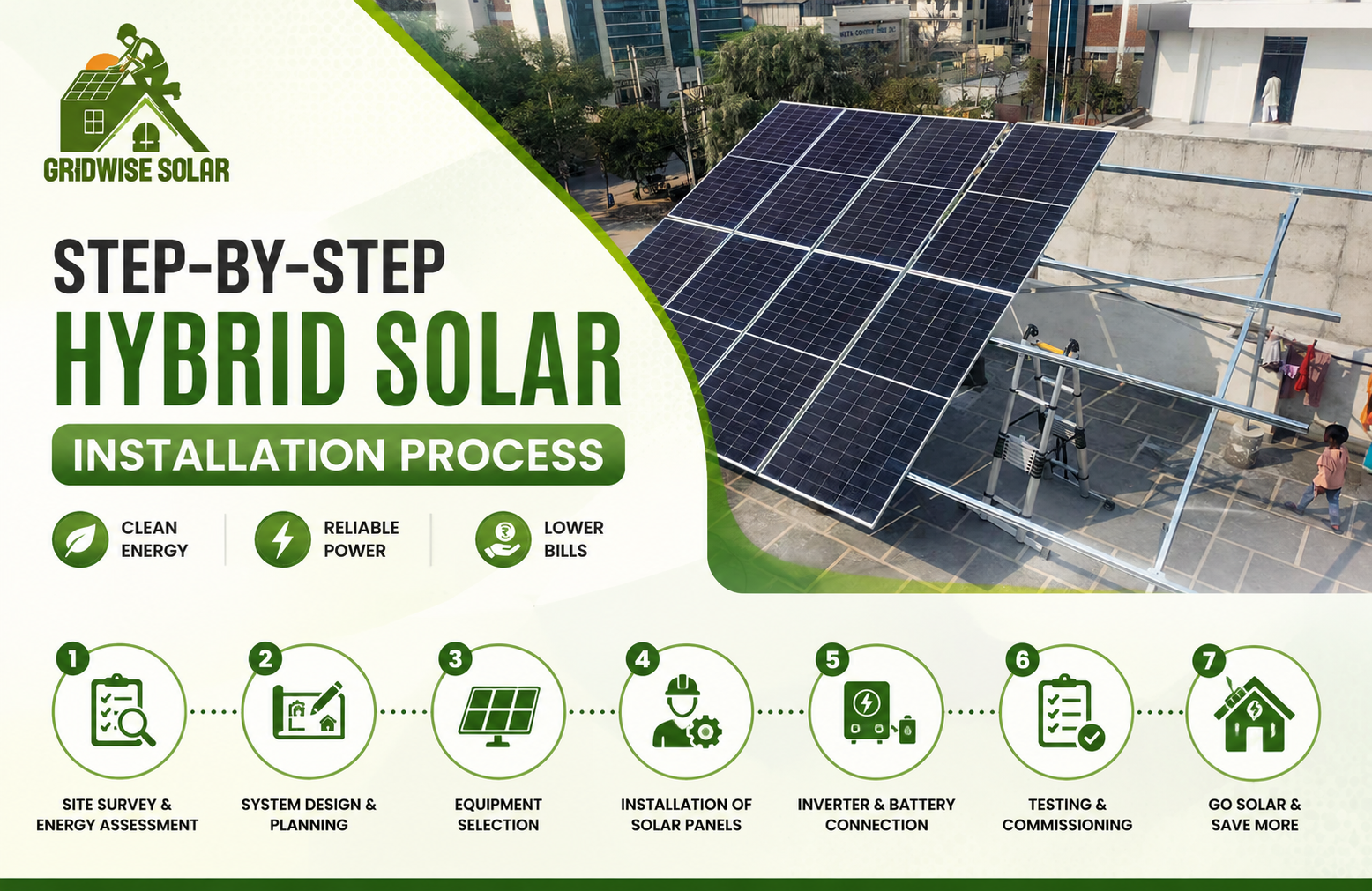
Step-by-Step Hybrid Solar Installation Process
A hybrid solar system uses an organized installation sequence in which each phase influences overall output, cost savings, and how well the battery backup performs. Here is the way professional teams put a hybrid solar system in place.
Step 1: Electricity Usage Analysis
The opening step in the hybrid solar installation process involves learning your household’s electricity habits. Installers review your past monthly bills, check appliance power needs, daytime usage, and highest demand periods. This information will accurately tell you what solar panels powering your home need and what kind of battery storage your home should have.
Step 2: Rooftop Inspection and Feasibility Check
Technicians thoroughly review the roof before any detailed planning can begin, to see available roof area, roof orientation, structural integrity and obstructions. This check reveals if the roof can support the system and how to arrange the layout for the best solar results.
Step 3: Sunlight and Shadow Assessment
Shadow analysis counts among the key solar system installation steps. Walls, tanks, trees, or nearby buildings can cut panel output. A careful sunlight study finds the optimal spots for panels so they receive steady generation throughout the day.
Step 4: Backup Load Planning
Hybrid systems come with battery support, so the team must decide which appliances have to keep running when power fails. This covers important items like lights, fans, fridges, and internet routers. The decision shapes battery size and inverter choices.
Step 5: System Capacity Planning
Once usage patterns and backup requirements are clear, the overall system size is decided. The size (3kW, 5kW, etc.) will depend on roof size, current electric bill, and how much time they wish to have their backup system operating. The right sizing maximizes savings, and avoids unnecessary expenditure.
Step 6: Hybrid Inverter Selection
Hybrid inverter controls energy transfer between panels, the battery and the grid. Picking the correct inverter guarantees good solar use, intelligent battery charging, and quick switchover to backup. This forms one of the most technical stages in the hybrid solar installation process.
Step 7: Battery Selection and Backup Planning
Your selection of battery determines the duration of home power outages. Lithium batteries usually chosen for their extended lifespan, higher efficiency, and quicker charging. Size gets matched to your essential loads and desired backup duration.
Step 8: Solar Structure Installation
The mounting frame goes up first, ahead of the panels. It needs to stay strong, resist weather, and sit at the right angle for maximum sun. A solid frame supports panel stability and helps the system last for years.
Step 9: Solar Panel Installation
Once the structure stands ready, panels get fixed in place with care. Proper tilt, firm attachment, and correct gaps improve generation results. This stage has a direct effect on how the full hybrid solar setup for houses performs.
Step 10: Inverter and Battery Setup
Inverter and battery units get installed and linked after the panels are in position. This step builds the system brain that coordinates solar output, battery storage, and backup functions.
Step 11: Electrical Wiring and Safety Setup
This phase includes all wiring connections, grounding, AC cables, power cables, surge protection, and safety switches. Good electrical work provides safety, increased efficiency and consistent long-term performance.
Step 12: System Testing and Activation
The complete system is tested before its first switch-on for operation, to check for panel output, battery charging, inverter response and changeover for backup to the operating system. The checks ensure each component functions as it should before the homeowner uses it.
Common Installation Mistakes That Affect Hybrid Solar Performance
Even high-quality parts can underperform when installation falls short. These errors lower efficiency and hurt long-term savings.
- Wrong Battery Size
Bad battery planning creates short backup time or wasted money.
- Poor Rooftop Planning
Weak layout design cuts down solar output.
- Cheap Inverter Choice
Low-grade inverters waste energy.
- Weak Electrical Work
Bad wiring leads to safety hazards.
- No Backup Load Planning
Important appliances may lose power during blackouts.
Why Choose Gridwise Solar for Hybrid Solar Installation?
Gridwise Solar has grown into a reliable choice for hybrid solar systems since the company emphasizes full energy packages instead of basic panel fitting. Hybrid systems need exact planning, correct battery sizing, smooth inverter connection, and intelligent energy control. This is the area where Gridwise Solar excels by offering performance-driven hybrid solar solutions for homeowners who want lasting savings and solid backup power.
Customized Hybrid System Planning
Gridwise Solar builds every hybrid solar system around your real electricity use, backup demands, and roof situation. Rather than pushing standard options, they develop tailored setups that increase savings, improve battery life, and support strong system performance for years.
Smart Battery Planning and Backup Optimization
Battery design stands as a central element in any hybrid system. Gridwise Solar calculates battery needs based on your actual outage requirements so the setup gives useful backup time without adding needless expense.
Advanced Hybrid Inverter Integration
Hybrid inverters direct power between panels, batteries, and grid supply. Gridwise Solar fits modern inverter technology that raises charging speed, improves backup response, and delivers better overall energy control in the complete hybrid solar setup.
Professional Installation Team
Gridwise Solar works with skilled installers who focus on correct panel positioning, durable mounts, tidy wiring, and full safety standards. This approach raises system output, dependability, and lasting strength.
Complete End-to-End Installation Support
From initial roof checks and sunlight studies through to fitting, testing, and startup, Gridwise Solar manages the entire hybrid solar installation process. Customers receive support from a single experienced partner instead of dealing with several separate suppliers.
Performance-Focused Installation Approach
Gridwise Solar approaches every job with performance as the top priority. Each installation aims for highest possible generation, stronger battery backup, and greater savings over time so homeowners enjoy the best return on their investment.
Long-Term Support After Installation
Gridwise Solar keeps helping customers long after activation. Through ongoing performance checks, technical advice, and maintenance help, the company stays ready to support continued high efficiency and reliable operation.
Conclusion
A hybrid solar system counts as one of the best home energy improvements available now because it joins cost savings, backup power, and greater independence into a single package. Yet the final outcome rests completely on the quality of the installation.
The correct hybrid solar installation process delivers proper sizing, effective battery support, strong inverter operation, and the highest possible savings for years ahead.
Every stage from usage study to final startup plays an important role.
And with a proven installer such as Gridwise Solar, homeowners can create a high-performing hybrid solar system built for lasting reliability, dependable backup, and solid financial benefits.