


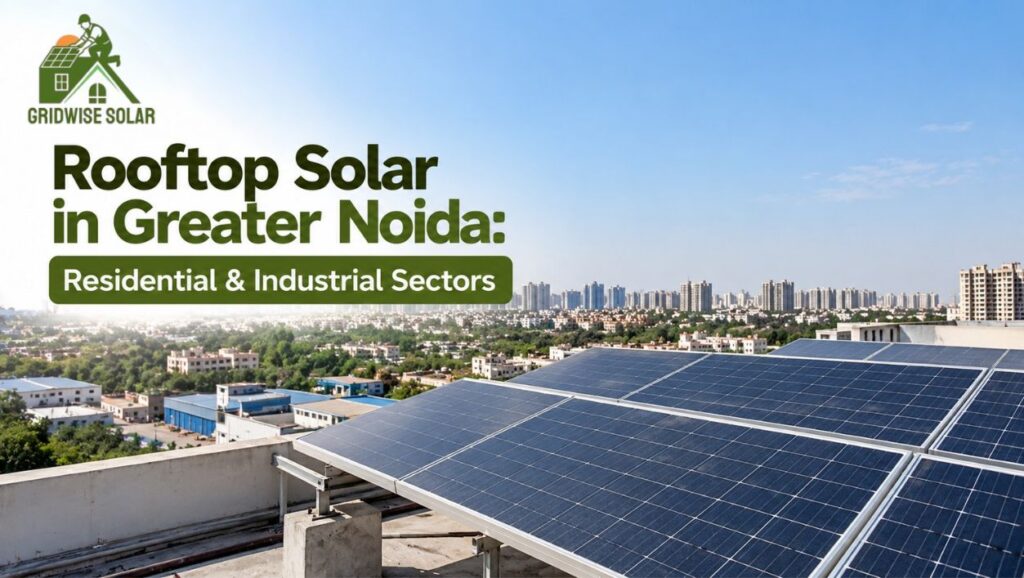
More homeowners, housing societies, factories, warehouses, and commercial sites now see rooftop solar as a practical way to control electricity costs. Greater Noida has both housing developments and industrial areas. So solar in Greater Noida works differently from one property to the next. It depends on how much power the property uses, how much roof space it has, and how it operates.
Homes usually focus on household use and long-term bill savings. Factories often need a system built around machinery loads, production schedules, and heavy daytime demand. The right equipment and the right installer help the system fit your property. A standard package rarely does.
You might own a home in Greater Noida West or run an industrial site. Either way, it pays to understand system design, installation needs, and cost factors before you invest.
How Does Rooftop Solar Work?
Panels turn sunlight into direct current (DC) electricity. An inverter then converts it to alternating current (AC). Household and industrial equipment can use AC power.
Your setup determines how solar power works with your electricity supply.
- On-grid Solar: Links to the electricity grid. It can cut what you draw from the grid when solar output matches your demand. Export credits depend on the applicable rules and metering.
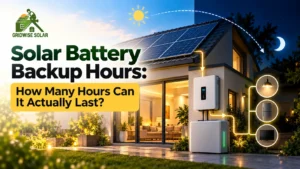
- Hybrid Solar: Pairs solar generation with compatible battery storage. If designed for it, it can back up selected loads.
- Commercial and Industrial solar: Built around electricity demand, roof area, electrical infrastructure and operating schedules.
A professional solar installation company in Greater Noida should consider these factors before recommending a system size or equipment.
7 Key Considerations for Residential and Industrial Rooftop Solar
1. Understand the Property’s Electricity Demand
Start by determining how much electricity the property uses and when.
At home, recent electricity bills show monthly use and seasonal swings. They also show what air conditioners, water heaters and pumps add. An independent house or villa may need something different from an apartment or builder floor, especially when the roof is shared.
Industrial sites need a closer look. Production machinery, compressors, cooling systems and motors can create big loads all through the working day.
A good solar company in Delhi NCR can use your usage data and site conditions to work out a realistic system size.
2. Evaluate Rooftop Space and Structural Conditions
Roof area limits how many panels fit. But you often can’t use the whole roof.
Home rooftops often have water tanks, staircases, overhead structures and shaded spots. The layout should leave room for maintenance access. It should also think about how nearby buildings block the sun.
Industrial roofs need extra checks on structural strength, roof material, drainage, maintenance access and the state of the structure. A big roof looks promising for solar. Only a site assessment can confirm that it’s suitable.
If you’re weighing solar installation in Greater Noida, these checks help you reach a practical layout before anyone picks equipment.
3. Select Suitable Solar Panels and Inverters
Panels, inverters, mounting structures and electrical protection equipment have to work as one system.
Gridwise Solar installs high-efficiency TOPCon solar panels. The final setup depends on each project’s needs. Panel size, electrical characteristics, rooftop layout and inverter compatibility all matter.
For homes, the inverter choice may depend on system capacity, your electrical supply, shading and whether you want battery backup. Industrial jobs might need three-phase equipment and several inverter units. The design has to suit the facility’s electrical setup.
A dependable solar company in Greater Noida should name the equipment it proposes and explain why it fits your project.
4. Explore Solar Opportunities in Greater Noida West
Greater Noida West has housing developments, independent properties and other building types. Rooftop access, ownership and power use differ from one to the next.
Owners of independent houses can often plan a system around their roof. Apartments and housing societies are different. You need to sort out who owns the roof, what permissions the shared areas need, how common-area electricity works and which connection arrangement applies. Do that before you move ahead.
A solar power plant in Greater Noida West might be a rooftop system for one home, a shared facility or a bigger building. The right setup depends on who uses the power and how the project connects.
Before installation, confirm the permissions and metering rules that apply to your type of property.
5. Plan Industrial Solar Around Operating Loads
An industrial system must match the facility’s energy needs and operating pattern. Factories that run mostly during the day may use a large share of what their rooftop system produces. Plants with multiple shifts or power-hungry machines need a more detailed load analysis. This shows how solar output aligns with demand.
The design should look at:
- Daytime and seasonal electricity demand
- Available roof area and structural conditions
- Existing electrical panels and connections
- Inverter capacity and electrical protection
- Access for inspection and maintenance
- Applicable approvals and metering arrangements
Putting in industrial solar panels in Greater Noida takes joined-up planning. The new system has to fit with the electrical setup you already have.
6. Understand Installation Costs and Financial Returns
Capacity isn’t the only thing that sets the price of rooftop solar. Equipment specs, mounting needs, roof complexity, cable routes, electrical protection and installation work all change the quote.
Industrial projects can add engineering, electrical integration and coordination with day-to-day operations. If you want battery storage, expect extra equipment and installation costs.
Before you approve a proposal, compare:
- Panel and inverter specifications
- Mounting structure and electrical components
- Installation and commissioning scope
- Taxes and exclusions
- Warranty documents and support arrangements
- Estimated generation and the assumptions behind the financial numbers
Your savings depend on generation, how much power you use yourself, tariffs, export rules and system cost. Ask for an estimate for your own site. A fixed savings percentage can mislead you.
7. Choose an Installer That Covers the Complete Process
A solar job has many steps. These include site assessment, design, buying equipment, mounting, electrical work, testing and handover. Your installer should explain each stage before work starts.
For a home project, confirm the equipment details, who does what during installation, the warranty terms and how to get support after commissioning.
For an industrial project, ask about engineering coordination, site safety, installation scheduling, electrical integration and paperwork. These points matter a lot when the crew has to work around a business that keeps running.
Gridwise Solar offers residential and commercial rooftop solar across the region. It uses TOPCon panels and inverter setups chosen to suit each project.
What Is the Rooftop Solar Installation Process?
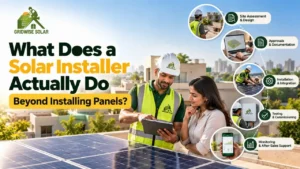
Most projects move through six stages:
- Initial Consultation: Go over your electricity bills, property type and solar goals.
- Site Assessment: Check roof space, shading, structural condition and the electrical setup.
- System Design: Decide the capacity, panel layout, inverter setup and installation scope.
- Quotation and Coordination: Confirm the equipment, costs, responsibilities and approvals you need.
- Installation: Fit the mounting structure, panels, inverter, cabling and protection equipment.
- Testing and Handover: Run the relevant checks. Then receive the system documents and operating guidance.
This process lets owners know what they’re getting before installation begins.
Conclusion
Rooftop solar in Greater Noida suits many needs. Homes use it for daily household power. Factories and warehouses use it to cover heavy daytime loads. The right system depends on how suitable the roof is, how much energy you use, how well the equipment fits together and what your electrical setup looks like.
Are you a homeowner or business exploring solar services in Delhi NCR? Gridwise Solar offers customized rooftop solar solutions planned around each property. You might be looking at residential solar in Greater Noida West or a larger industrial installation. Either way, a site assessment is the first step toward a well-informed decision.
Contact Gridwise Solar to talk about your rooftop, your electricity use and your solar installation needs.
FAQs
1. Is rooftop solar suitable for homes in Greater Noida West?
Often, yes. Independent homes and other eligible properties with enough usable roof space can work well. Shared rooftops may need extra permissions and planning.
2. Can factories install industrial rooftop solar in Greater Noida?
Yes, if the roof is suitable and passes a structural check. The electrical setup, the approvals you need and the factory’s energy needs also come into play.
3. What affects the cost of solar installation in Greater Noida?
The size of the system, the panels, the inverters and the mounting structures all change the price. So do the electrical work, roof conditions and any battery storage.
4. Does rooftop solar provide electricity during a power cut?
A standard on-grid system usually shuts off when the grid goes down. For backup, you need compatible equipment and a system designed for it. Long backup usually means batteries.
5. How do I choose a solar installation company in Greater Noida?
Compare site assessment, system design, equipment specs, installation scope and safety provisions. Look at commissioning, warranty documents and after-sales support too.